Europe's Diesel Winter: the 2026 energy shock every market is pricing except equities
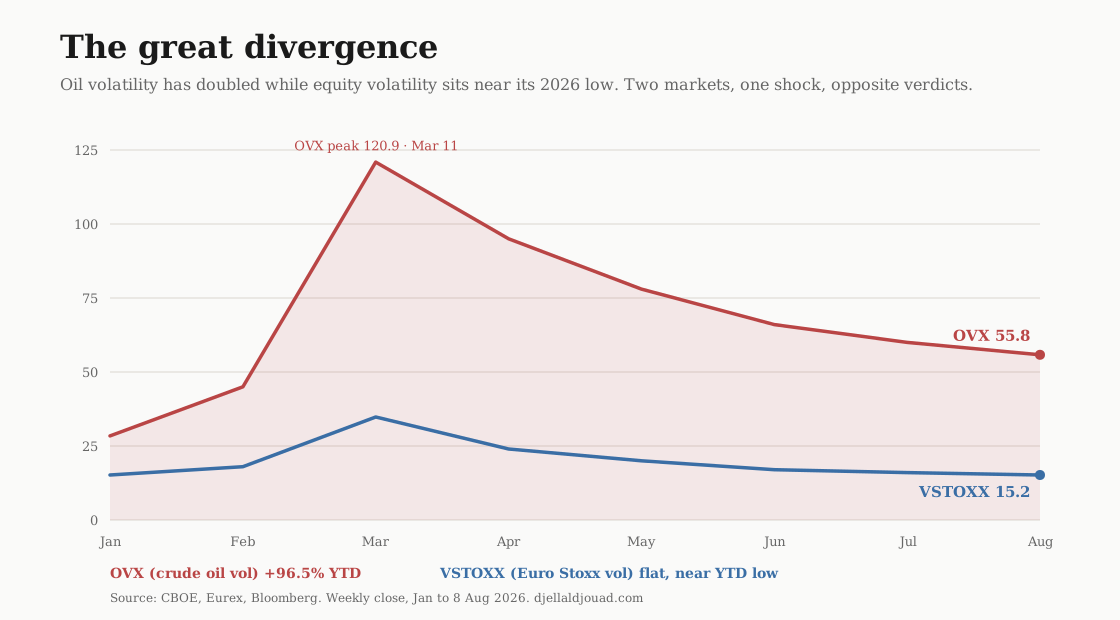
Six months into the Iran war, almost every market that prices European energy risk is screaming. The diesel crack has tripled. Natural gas has nearly doubled. Oil volatility has doubled. Gas storage is filling into winter at its lowest seasonal level in eighteen years. And then you look at the one gauge everyone actually watches, equity volatility, and it is back near the floor it started the year at. From where I sit, that divergence is not a detail. It is the trade.
I have spent the week going instrument by instrument through the shock that started when the Iran war broke out in early March. The temptation with a story this big is to narrate the headlines. I would rather do the opposite. Headlines tell you what happened. The cross-market tape tells you what the market believes will happen next, and right now the tape is deeply, unusually inconsistent. Commodities and credit are positioned for a hard European winter. Equity vol is positioned for a soft landing. They cannot both be right.
The crack is the barometer, not the crude
Start with the product, because the product is where the tightness actually lives. The ICE gasoil-Brent front-month crack is trading at 67.35 dollars a barrel. The five-year average is 27.70. That is 2.4 times the norm, and the year-to-date move is plus 210 percent. It peaked at 81.11 on 29 July, the day Russia's diesel export ban stacked on top of an already depleted European distillate balance. The New York equivalent tells the same story from the other side of the Atlantic. NY Harbor ULSD opened the year at 211 cents a gallon, spiked to 461 in under eighty days, and still sits up 84 percent on the year.
The reason I lead with the crack rather than the crude is that the crack strips out the war premium in oil and isolates the thing that is genuinely broken, which is refining and distillate supply. The outright gasoil contract peaked back on 7 April at 1,527 dollars a tonne. The crack peaked almost four months later. When the product spread re-widens after the crude has already rolled over, you are not looking at a geopolitical spike. You are looking at a structural shortage of the middle of the barrel.
The International Energy Agency put a number on the demand side that stopped me: the war has wiped out all of 2026 global oil demand growth, the first annual demand decline since the 2020 pandemic. Demand destruction of that size would normally crush product cracks. Instead the cracks are at crisis levels, which tells you the supply side is tighter than the demand hit is large. ConocoPhillips warned back in April of imminent critical shortages for some nations. The physical market agreed. US distillate exports hit a record 1.9 million barrels a day in the week to 5 August as the world drained American stockpiles, pushing domestic diesel inventories to roughly a twenty-year seasonal low even as refiners ran flat out.
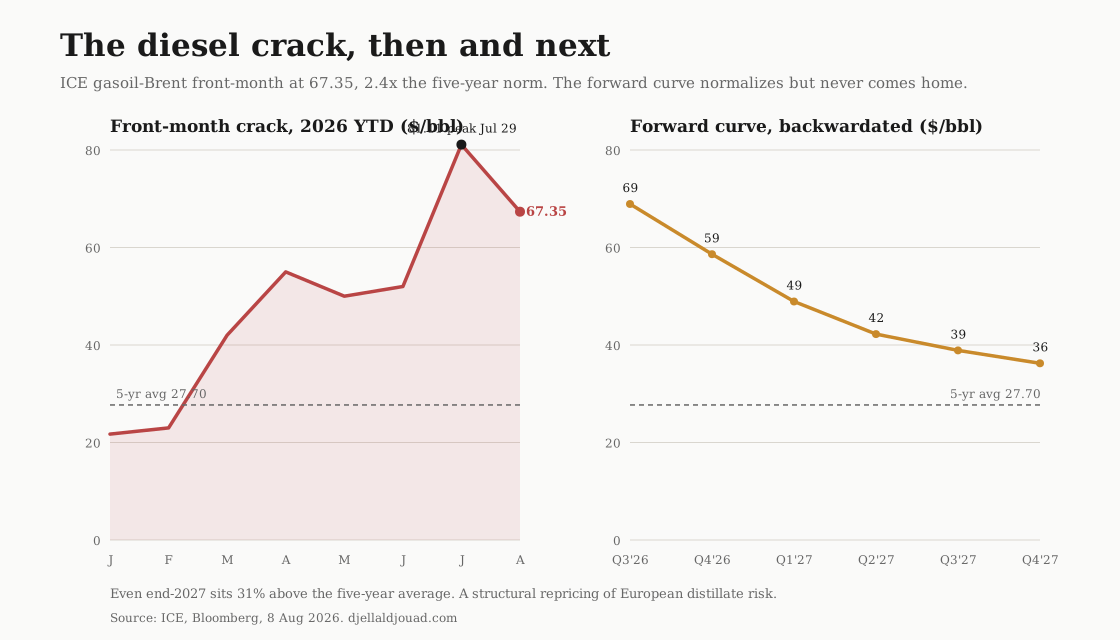
That forward curve is the single most important picture in this whole note. The market is not pricing a spike that snaps back. It is pricing a slow glide that settles well above the old normal. Q3 2026 sits at 68.93, Q4 at 58.62, and by the fourth quarter of 2027 the implied crack is still 36.25, or 31 percent over the historical average. Traders are telling you they expect the Russia ban to lift and some LNG to reroute, but they are also telling you they have permanently marked up the risk premium on European distillate. That is a repricing, not a blip.
Refiners are behaving like it is 2022 again
You can read the same conclusion off refiner behavior, which has turned almost entirely defensive of domestic supply. Russia banned diesel exports from 8 July after Ukrainian drone strikes hit key refineries, then extended the ban through the end of August, and European gasoil futures jumped 13 percent on the announcement day alone. Reuters and the wires tracked the knock-on scramble as it spread. Repsol in Spain pivoted its slate back toward diesel, calling it the product most affected by its earlier jet fuel push. Serbia's NIS ramped crude runs from 9,500 to 13,000 tonnes a day to offset barge disruption on a drought-starved Danube. Greece's Helleniq is likely to push its Thessaloniki maintenance out to 2027 to keep capturing the margin. Australia's Viva brought Geelong back to 90 percent after a fire, and Canberra is even studying its first new refinery since the 1960s.
On the profit side the numbers are almost obscene. A 67 dollar crack on a typical 100,000 barrel a day refinery is roughly 2.4 billion dollars of annualized gross margin from gasoil alone. That is why Valero, PBF and HF Sinclair posted some of their most profitable quarters ever in the second quarter. It is also why, paradoxically, the shortage will persist: everyone with a working refinery is already running it as hard as it will go. There is no slack left to bring on. When FGE and Energy Aspects warned in April of a surprise round of European run cuts on negative margins, that risk has now flipped into its opposite, maximum throughput into a structural deficit, which is a market with no shock absorber left.
The winter gas cliff
If diesel is the acute problem, gas is the slow-motion one, and it is arguably more dangerous because it is timed for the exact worst moment. Dutch TTF front-month opened the year at 29 euros a megawatt hour, peaked at 63.58 on 24 July, and sits at 55.54 now, up 91 percent year to date. The driver is the Strait of Hormuz, which has choked Middle East LNG into Europe. And the storage math is genuinely alarming.
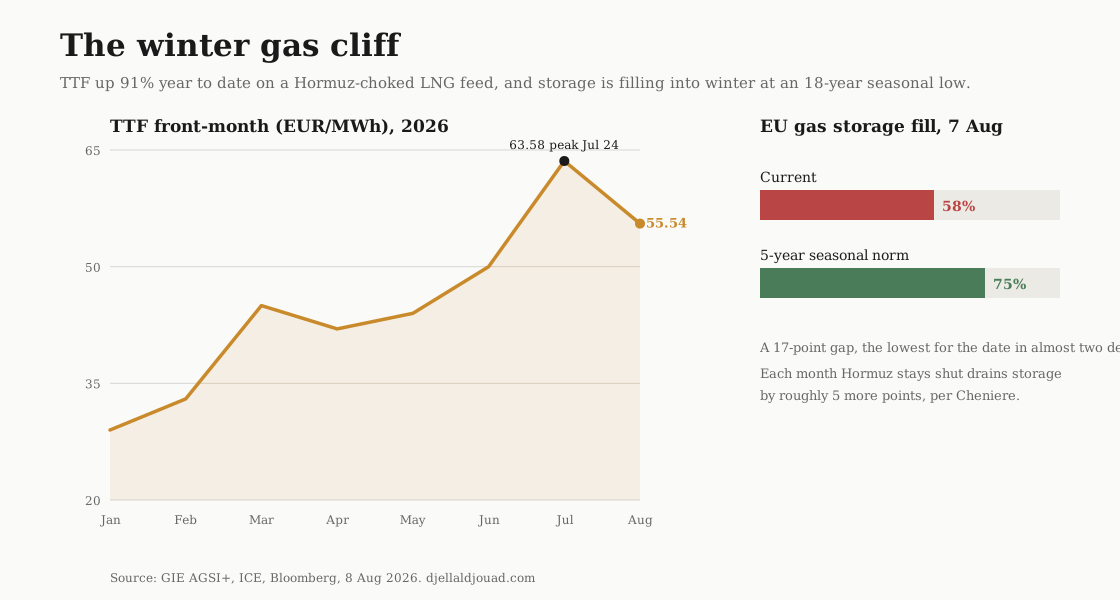
EU storage is at 58 percent fill versus a five-year norm of 75, the lowest for this time of year in nearly two decades. GIE's AGSI data is the reference the whole market watches on this, and the trajectory is not closing the gap fast enough. Cheniere warned that even if Hormuz flows normalized immediately, Europe would probably still miss its 80 percent target before winter, and that every month Hormuz stays effectively shut cuts European storage by about 5 percentage points. LNG tankers are already diverting from Egypt and Brazil to France and Italy to plug the hole. The negotiations between Iran and Oman are so fluid that TTF has swung as much as plus 10 and minus 11 percent in single sessions.
Then there is the compounding factor almost nobody outside the physical desks is pricing: drought. The Rhine is approaching a 36-year low, choking barge deliveries of coal, chemicals and fuel into southern Germany and Switzerland. The Danube is low enough that it forced part of Hungary's Paks nuclear plant offline and cut hydropower from the Nordics to the Alps. So Europe is simultaneously short of gas, short of the river logistics that move the substitutes, and short of the hydropower that would have covered the gap. That is three shortages layered on one another, and it is why I think the gas story is the one most likely to surprise to the downside on price stability this winter.
The inflation the ECB cannot wait out
The macro transmission is already visible. Eurozone headline CPI ran from 1.7 percent year on year in January to a peak of 3.2 percent in May, and sits at 2.9 percent in July, nearly double where it started and comfortably above target. It is not the 10.6 percent of October 2022, but the shape of the curve is the same energy-driven surge, and the ECB knows it.
That is what forced the pivot. On 11 June the ECB raised the deposit rate 25 basis points to 2.25 percent, its first hike since 2023, explicitly because it could not wait out the war. On 23 July it held, but only after some governing council members pushed for an immediate second hike. UBS now expects another 25 in September. Here is the part that should make any rates person uncomfortable. Economists are openly drawing the parallel to 2011, when the ECB hiked into a supply shock and had to reverse within months as the periphery cracked. A serious minority, JPMorgan Asset Management, UBS and RBC BlueBay among them, argue the market is pricing too many hikes and underestimating the recession risk. The Bank of France has already cut 2026 growth to plus 0.5 percent, the slowest in over a decade outside COVID. Hiking into that is a policy bet that inflation expectations are the bigger danger than growth. It may be right. It was catastrophically wrong the last time.
The sovereign tax
Bonds felt it first and worst. European sovereigns had their ugliest week in a year in early March as the war torched the rate-cut trade. The selloff led with short-dated UK and Italian debt, and the long end got hit again on deficit fear as governments lined up energy subsidies and defense spending. Germany's 30-year yield touched its highest since 2011 in February on the spending surge, and the country's own fiscal watchdog warned it risks breaching EU debt rules.
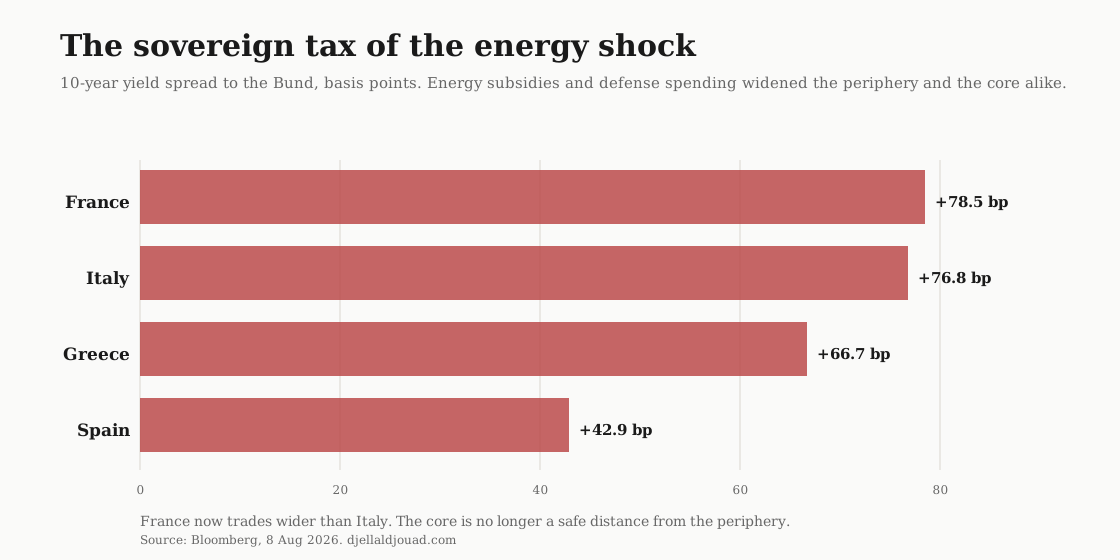
The spread picture is the quiet scandal. France is at plus 78.5 basis points to the Bund, wider than Italy at 76.8, with Greece at 66.7 and Spain at 42.9. France trading through Italy is not a rounding error. It is the market repricing where the fiscal risk actually sits. The EU has granted members up to 0.3 percent of GDP in extra fiscal room for energy aid, and the Bruegel think tank is urging Brussels to roll over NextGenerationEU debt to preserve joint borrowing capacity. Every one of those measures is a step toward more issuance, which is why the long end stays heavy even as the front end prices hikes.
Credit is where it gets real
Index credit has been oddly composed through all of this. iTraxx Main sits at 51.3 basis points, only marginally wider on the year after spiking to 73.5 at the late-March peak. Crossover is at 249.6, having nearly doubled off its January lows into that same peak before retracing. The Crossover to Main ratio near 4.9 times tells you the stress is concentrated in sub-investment-grade names with real energy exposure, not spread evenly. That is the right place to look, so I looked name by name.
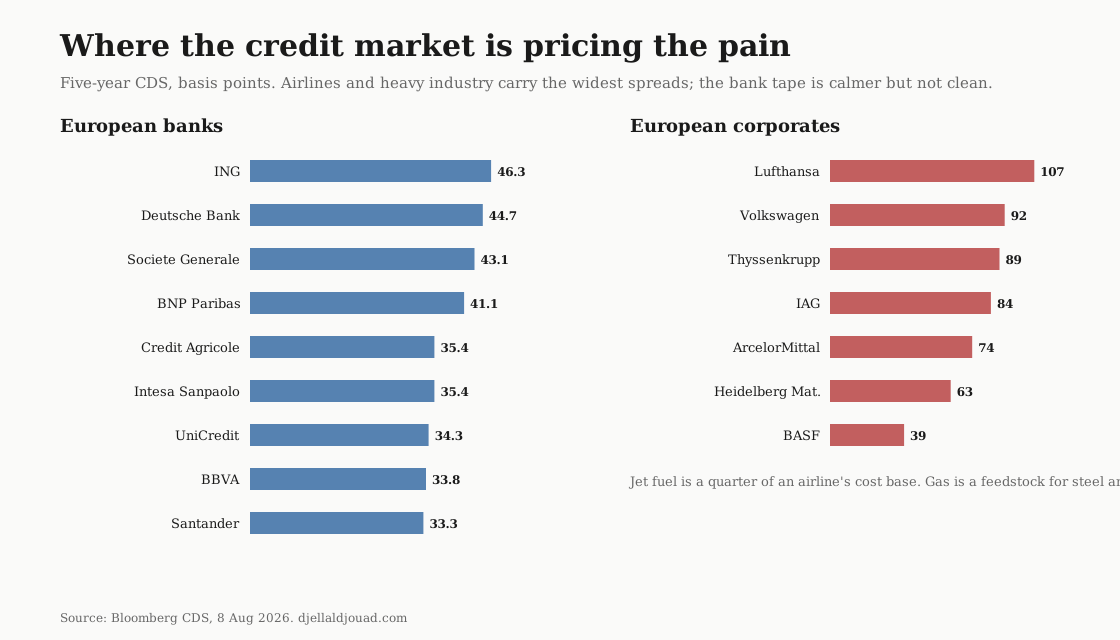
The shock reaches credit through three channels, and it helps to keep them separate. First, direct cost: airlines, chemicals, steel, cement and logistics that burn fuel or gas as a core input. Second, loan books: banks with unsecured corporate exposure to those same sectors. Third, sovereign feedback: governments subsidizing energy, widening deficits, and lifting bank funding costs through the sovereign-bank nexus.
Airlines carry the most acute stress. Lufthansa's 107 basis point CDS is the widest in my corporate sample, with jet fuel around a quarter of operating cost and much of the exposure unhedged. IAG, the British Airways and Iberia parent, has abandoned its 2026 growth plans outright. Ryanair, better hedged at 80 percent of fuel near 67 dollars, still warned on unit costs for its next fiscal year. Chemicals are the structural vulnerability. BASF's CDS is the tightest in the group at 38.8, but that reflects its rating, not its exposure: its Ludwigshafen complex, the world's largest integrated chemical site, is acutely levered to German gas, and UBS and Commerzbank both flag chemicals as the sector most exposed to gas. Steel and heavy industry follow, with Thyssenkrupp at 88.8 on a free cash flow miss and ArcelorMittal at 74.5 on energy-intensive blast furnaces. The DIHK survey of more than 3,000 German firms found a third are delaying investment or considering moving production abroad over energy costs, which is the deindustrialization risk made concrete.
On banks, the market is calmer, and I think that calm is the lagging read. ING at 46.3 and Deutsche Bank at 44.7 carry the widest spreads, and Bloomberg Intelligence estimates both face potential losses of 12 percent or more of annual profit from energy-linked credit deterioration. UniCredit disclosed its energy sector exposure rose 697 million euros in the first half. Fitch, for balance, expects French bank profitability to keep improving on net interest income, so this is a headwind rather than a solvency event. But the sharpest warning came from AT1, the riskiest layer of bank capital, where Man Group says investors are far too complacent and spreads are too tight for the macro backdrop. When the loss-absorbing tranche is priced for calm and the underlying loan books face a possible double-digit profit hit, that is precisely the kind of mispricing that resolves violently rather than gradually.
The countries carrying the most risk
Two members are in genuine acute stress. Hungary is the sharpest: the Danube drought forced part of the Paks nuclear plant offline, pushing it into expensive electricity imports, the forint posted its deepest monthly loss since October 2024, and the government has warned of a painful budget impact. Germany is the systemic one, simply because of its size, its position as the bloc's biggest gas consumer, and the Rhine logistics crisis layered on the storage deficit. If Germany runs short, the shortage is exported to its neighbors through the shared grid and price. Below them, Italy, Serbia, Poland, the Czech Republic, France and the UK all sit in the high-to-elevated band, whether through gas dependency, refinery outages, or, in the UK's case, factory cost pressure that hit its worst since 1992.
| Indicator | Level | Read |
|---|---|---|
| ICE gasoil crack (M1) | 67.35 $/bbl | +210% YTD, 2.4x norm |
| NY ULSD diesel | 390 c/gal | +84.5% YTD, backwardated |
| TTF gas front-month | 55.54 EUR/MWh | +91.5% YTD |
| EU gas storage | 58% | vs 75% norm, 18-yr low |
| Eurozone CPI (Jul) | 2.9% YoY | up from 1.7% in Jan |
| ECB deposit rate | 2.25% | hiked Jun, Sep hike likely |
| iTraxx Crossover | 249.6 bp | peak 361.8 (27 Mar) |
| France 10Y vs Bund | +78.5 bp | now wider than Italy |
| OVX oil vol | 55.8 | +96.5% YTD |
| VSTOXX equity vol | 15.2 | near YTD low |
What the positioning says
The futures positioning confirms the structural read. Managed money in heating oil flipped from a deep net short of 66,568 contracts in early January to a net long peak of 169,142 on 5 May, a swing of more than 235,000 contracts, and has since unwound to 80,681 as prices retraced. The CFTC Commitments of Traders data shows producers and commercial hedgers sitting net short 172,471 contracts, locking in elevated prices to protect physical margin. That divergence, speculative length against a large and persistent producer short, is the classic signature of a market in structural supply stress: financial players betting on continued tightness while the physical side hedges the risk of a reversal.
How I am reading it from the desk
Put the pieces together and the picture is coherent everywhere except one place. Commodities price a structural distillate and gas shortage that persists into 2027. The forward curve refuses to come home. Credit concentrates the stress exactly where the fundamentals say it should, in airlines, chemicals, steel, and the banks that lend to them. Sovereigns price the fiscal cost of subsidy and defense, with the core dragged toward the periphery. Positioning confirms it. Every one of those markets is internally consistent with a hard European winter.
And then equity volatility sits at 15.2, near its 2026 low, as if none of it is happening. That is the anomaly, and anomalies in vol are where the asymmetry lives. I am not calling a crash. The equity market has genuinely absorbed the shock so far, earnings have held, and the retracement in oil off the March highs was real. But when one market is priced for calm and five others are priced for stress, the cheap thing to own is the calm one's protection. European equity downside, funded against a diesel and gas complex that is still bid, is the trade the cross-market tape is quietly pointing at. The catalyst is on the calendar: a cold snap into a 58 percent storage book, or a Hormuz headline that does not resolve, and the gap closes the fast way.
The market spent 2022 learning that an energy shock is a credit shock with a delay. The 2026 tape says the lesson is being relearned, one instrument at a time, in the order it always comes. Diesel first. Gas next. Rates and sovereigns after. Credit last. Equities, so far, not at all. I would not want to be the last one still pricing calm.
Sources: Bloomberg, Bloomberg First Word, Bloomberg Intelligence, Dow Jones and The Wall Street Journal, March to August 2026. IEA on 2026 oil demand. GIE AGSI on EU storage. ICE and CFTC for crack curve and Commitments of Traders. ECB and Bank of France on policy and growth. Fitch, UBS, Commerzbank and Man Group on credit. This is market commentary, not investment advice. For related reads see The Hormuz Stalemate, Brent Cracked 100, and the Asian refining distortion. The full desk is at crossvol.com.